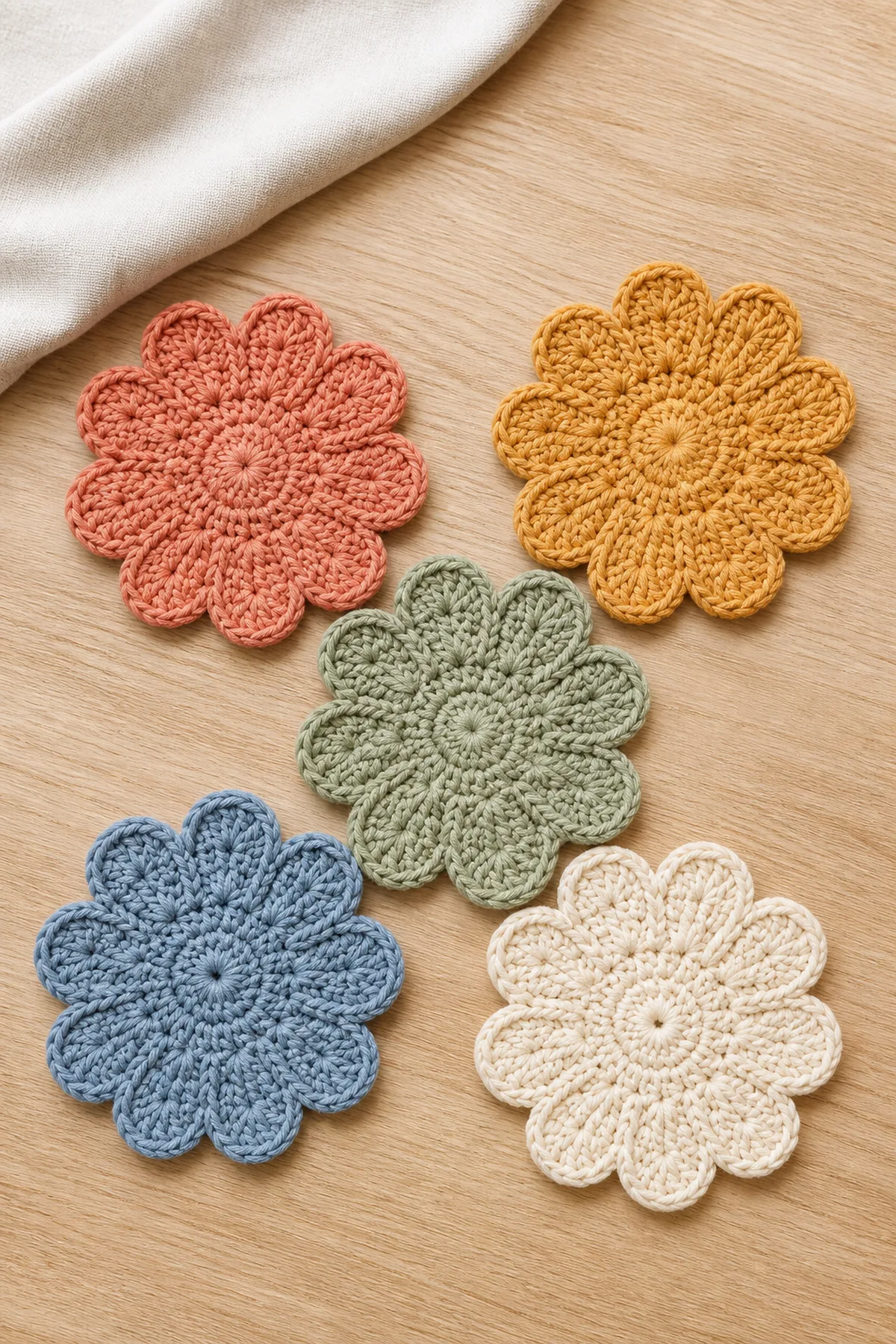
These easy crochet flower coasters turn a small amount of cotton yarn into a cheerful, useful project for your table. Each coaster begins with a compact center, expands to an even circle, and finishes with ten softly rounded petals. The three-round construction is quick enough for an evening project, while the repeated petal group gives newer crocheters useful practice reading stitches and keeping an accurate count.
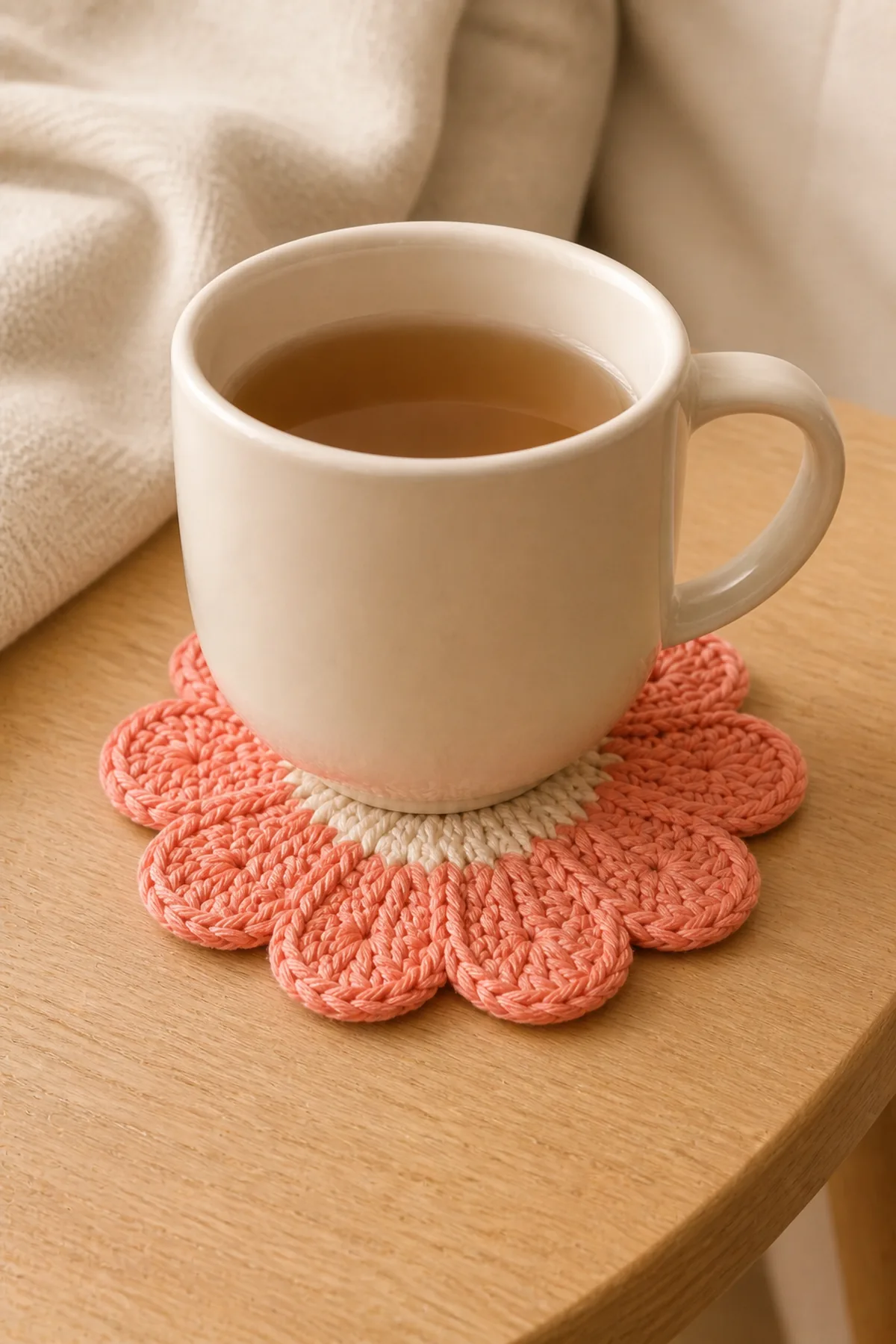
The finished coaster is approximately 4.5 inches (11.5 cm) across when made with worsted-weight cotton and a 4 mm hook. Make a matching set for everyday mugs, combine several colors for a spring table, or bundle four coasters as a handmade housewarming gift. Because every material, stitch count, image step, and finishing instruction is included below, you can work through the pattern without relying on unstated techniques.
Why You’ll Love These Crochet Flower Coasters
This pattern uses basic stitches—single crochet, half double crochet, double crochet, and slip stitch—in a predictable sequence. The small size makes it a low-commitment way to practice joined rounds. Cotton yarn creates a firm, absorbent fabric, and the petal edge adds shape without sewing separate pieces. One coaster takes only a modest amount of yarn, so the project is also useful for coordinating leftovers from larger cotton projects.
The design is intentionally flat. Round 2 doubles the center stitch count from ten to twenty, and Round 3 uses those twenty stitches as ten identical two-stitch petal groups. That relationship is the key to an even flower. Count before moving to the next round, mark the first stitch, and keep all beginning chains out of the stitch count.
Pattern Details
- Skill level: Easy
- Terminology: US crochet terms
- Finished size: Approximately 4.5 in (11.5 cm) across
- Hook: 4 mm (G-6)
- Gauge: Rounds 1–2 measure approximately 2.5 in (6.5 cm) across
- Estimated time: 30–45 minutes per coaster
- Construction: Three joined rounds worked from the center outward
Materials
- Worsted-weight 100% cotton yarn: approximately 20 yd (18 m) per coaster
- 4 mm (G-6) crochet hook
- Removable stitch marker
- Yarn needle
- Scissors
- Ruler or measuring tape
- Rustproof pins and blocking mat, optional
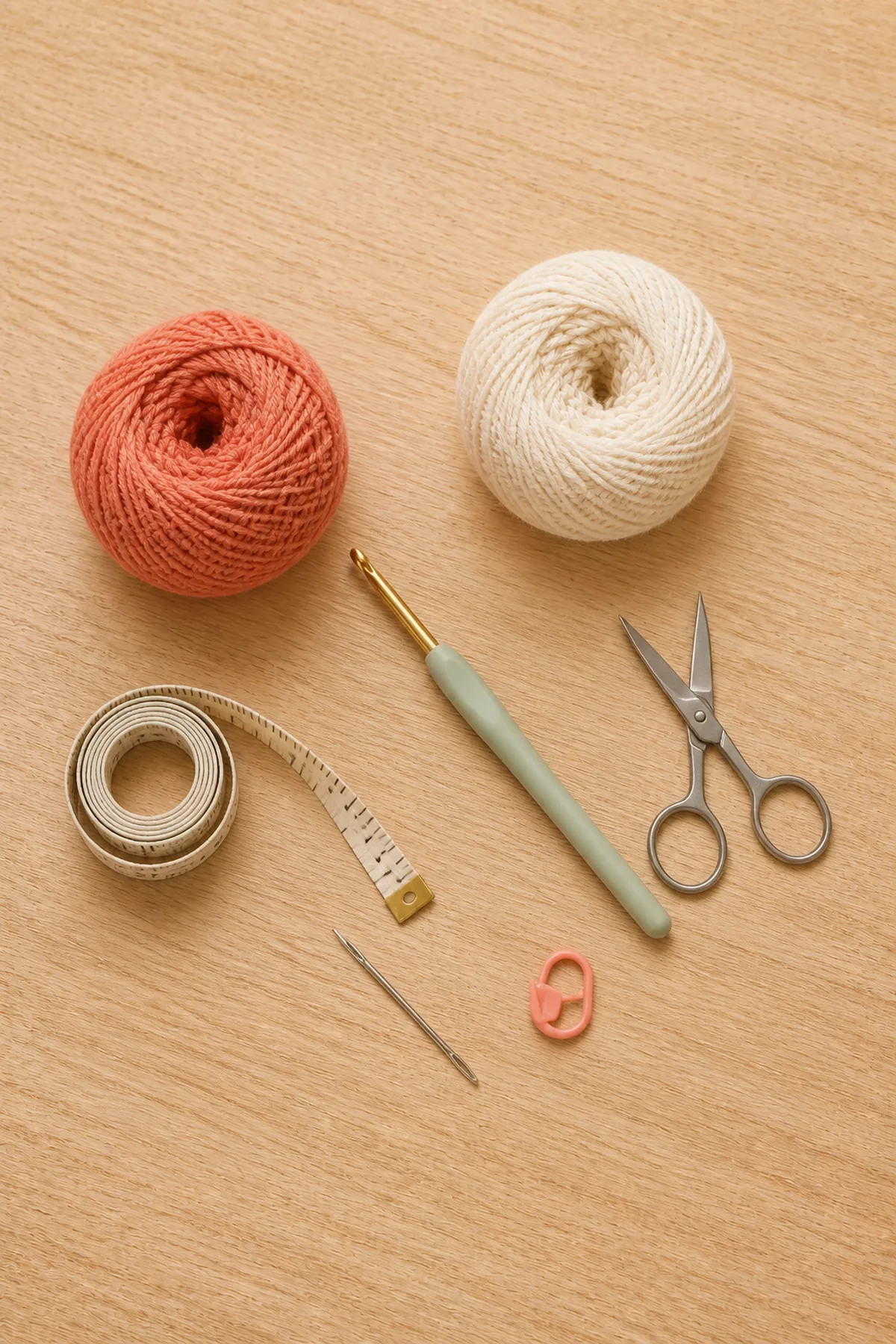
Choose a smooth cotton yarn with a firm twist. Very fuzzy yarn can hide the first stitch and blur the petal outline. A lighter center and darker petals make the construction easy to see, but a single-color flower works just as well. If you substitute a different yarn weight, select a hook that produces a flat, fairly dense fabric and expect the finished measurement to change.
Abbreviations and Special Stitch
- ch: chain
- dc: double crochet
- hdc: half double crochet
- rnd: round
- sc: single crochet
- sl st: slip stitch
- st(s): stitch(es)
Petal group: Slip stitch in the next stitch, then work one half double crochet, three double crochets, and one half double crochet in the following stitch. The slip stitch forms the valley and the five taller stitches form the rounded petal.
Before You Begin
Place a marker in the first stitch of each round even though the rounds are joined. The marker separates the first stitch from the joining slip stitch, which is never worked as part of the next round. Do not turn the work. If you want contrasting petals, complete Round 2, join, fasten off, and attach the petal color in the first stitch before Round 3.
Complete Crochet Instructions
Round 1: Make the Center
Make a magic ring. Ch 1; the chain does not count as a stitch. Work 10 sc into the ring. Pull the yarn tail to close the center without distorting the stitches. Join with a sl st to the first marked sc. (10 sts)
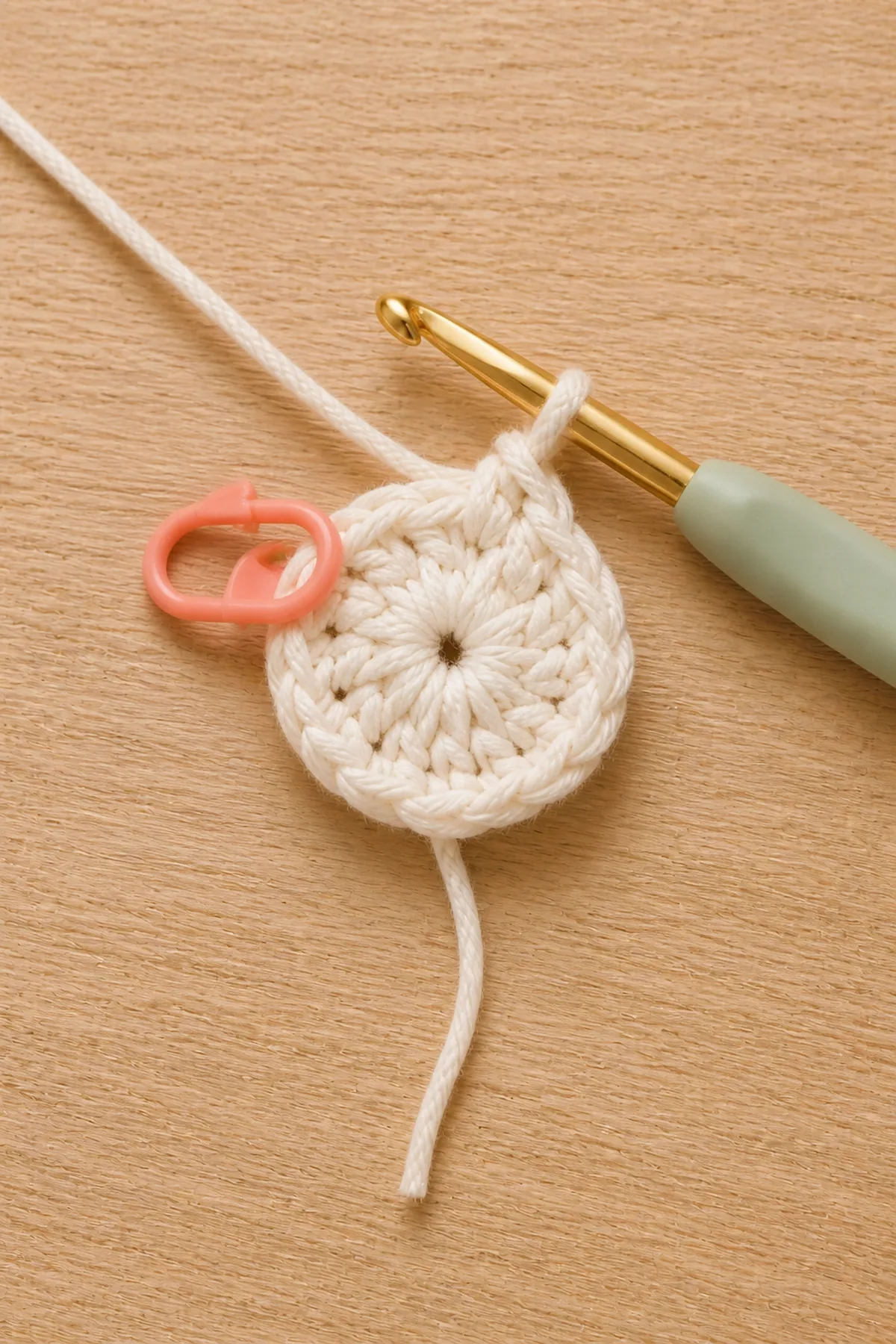
Spread the ten stitches around the closed center and check that the joining slip stitch sits outside the count. If there is still a visible opening, tighten the tail gently before continuing. The center should lie flat rather than forming a cup.
Round 2: Expand the Circle
Ch 1. Work 2 sc in each of the 10 stitches around. Join with a sl st to the first marked sc. (20 sts)
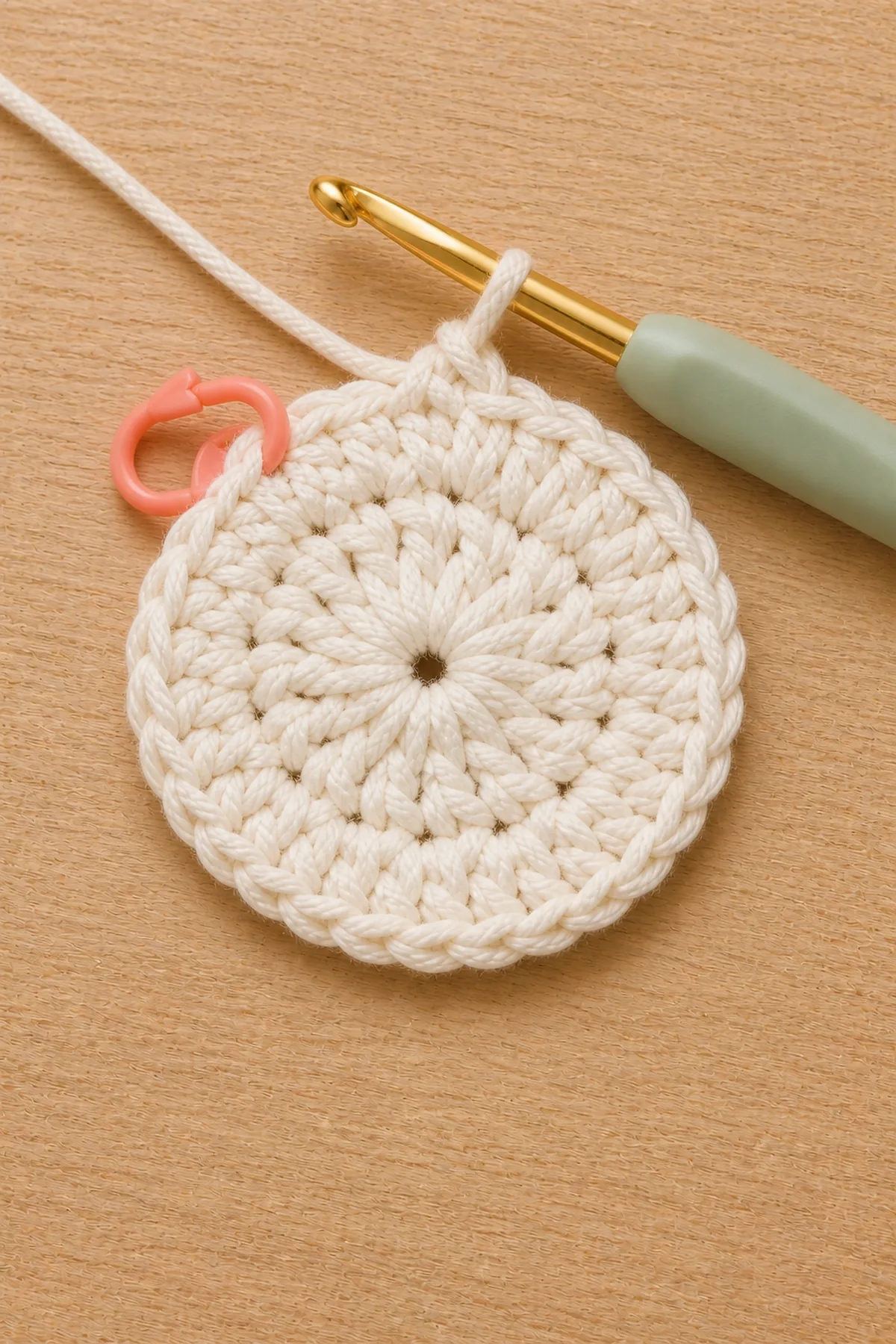
Count all twenty stitches individually. This round provides two stitches for every petal in the final round: one stitch receives the valley slip stitch and the next receives the five taller petal stitches. If the circle cups, relax your tension. If it ripples, check that you have not accidentally worked into the joining slip stitch.
Round 3: Crochet the Petals
Ch 1. Repeat the following petal group 10 times: sl st in the next stitch, then work (hdc, 3 dc, hdc) in the next stitch. After the tenth group, join with a sl st to the first sl st. (60 sts)
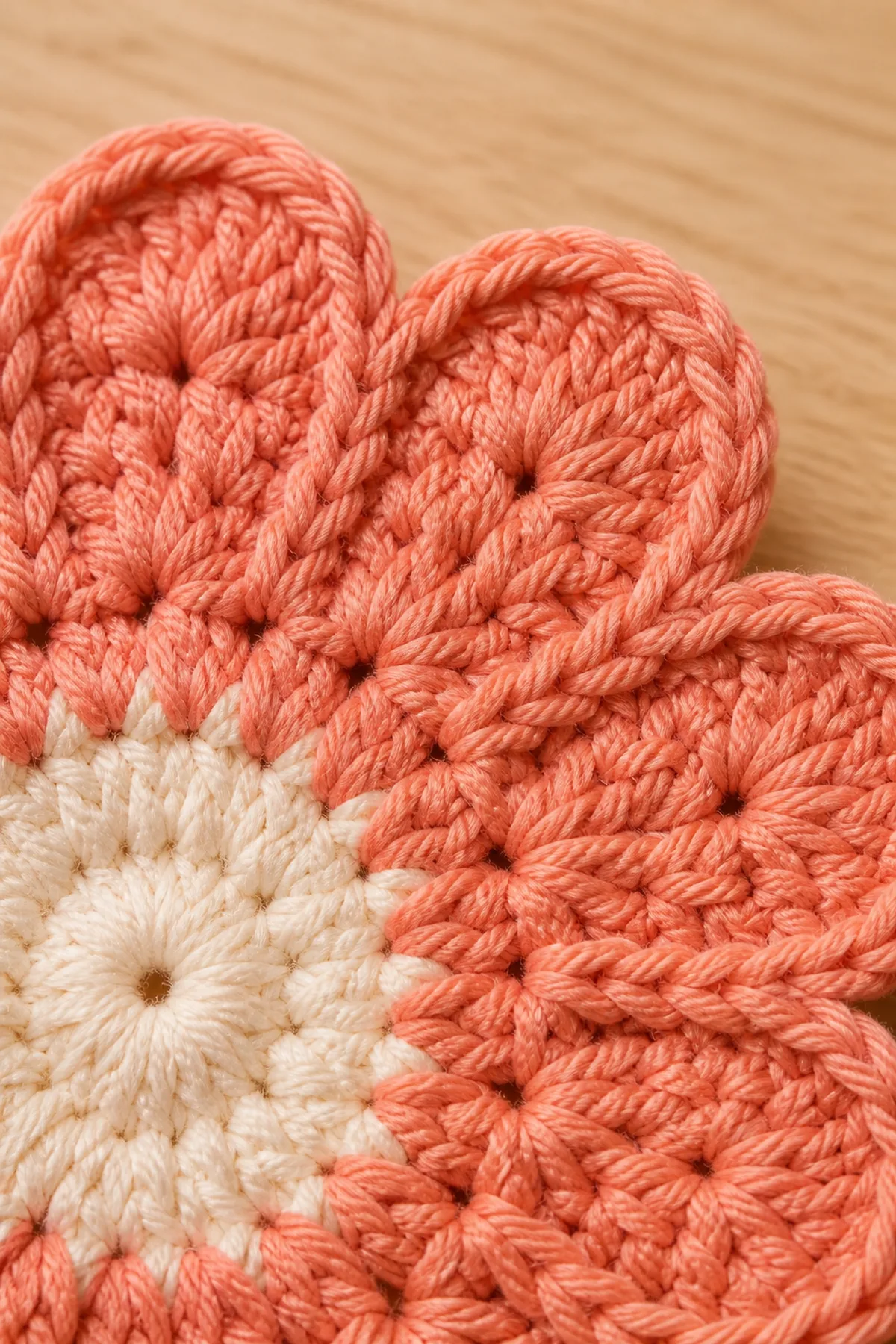
Each repeat consumes exactly two stitches from Round 2 and produces one low valley plus five visible petal stitches. Before fastening off, count ten valleys and ten petals. The last petal should meet the first without an unused base stitch. Fasten off with a 6-inch (15 cm) tail.
Finishing and Blocking
- Thread the center tail onto a yarn needle. Weave it through the back loops of several center stitches, moving in two directions so the magic ring cannot loosen.
- Weave the final tail through the back of the petal round. Avoid pulling tightly, which can pinch the edge.
- Trim both tails after they are secure.
- Lightly wet the coaster, press out excess water in a towel, and place it on a blocking mat.
- Arrange all ten petals evenly and place one rustproof pin at each petal tip to hold the flower flat. Allow it to dry completely.
Helpful Tips
- Count before the petals: Round 2 must have exactly 20 stitches for ten complete petal groups.
- Keep valleys relaxed: A tight slip stitch can pull the edge upward, so make each valley with a comfortable loop.
- Control ruffling: If the petals wave strongly, check the hook size and keep the three double crochets at a consistent height.
- Plan a set: Repeat one center color across the set and change only the petal shade for a coordinated palette.
- Check the yarn label: Follow the manufacturer’s washing instructions and test deeply dyed cotton for colorfastness.
Frequently Asked Questions
What yarn works best for crochet flower coasters?
Smooth worsted-weight cotton is the most practical choice because it is absorbent, washable, and structured enough to show the petal shape. Acrylic can soften with heat and is less absorbent, so it is not the first choice for warm drinkware.
Can I make the coaster larger?
Yes. Add an even single-crochet round before the petals and distribute ten increases around that round. You will then need to adjust the number of two-stitch petal groups to use every stitch evenly. Record the new stitch count before beginning the edge.
Why is my flower coaster curling?
Curling usually points to tight tension, a small hook, or a missing stitch in Round 2. Confirm the twenty-stitch count, make the valley slip stitches loosely, and block the completed flower flat. A slight curl often relaxes after washing.
Are these coasters machine washable?
Follow the yarn label. Many cotton yarns tolerate a gentle machine cycle, but placing small handmade pieces in a mesh laundry bag helps prevent stretching. Reshape every petal and dry the coaster flat.
Printable Crochet Flower Coaster Pattern Card
Pattern: Easy Crochet Flower Coasters
Finished size: Approximately 4.5 in (11.5 cm) across
Materials: Worsted-weight cotton yarn, 4 mm hook, marker, yarn needle, scissors, and optional blocking supplies.
Abbreviations: ch = chain; dc = double crochet; hdc = half double crochet; rnd = round; sc = single crochet; sl st = slip stitch; st(s) = stitch(es).
- Rnd 1: Magic ring, ch 1, 10 sc in ring; join to first sc. (10 sts)
- Rnd 2: Ch 1, 2 sc in each stitch; join to first sc. (20 sts)
- Rnd 3: Ch 1, repeat [sl st in next stitch, (hdc, 3 dc, hdc) in next stitch] 10 times; join to first sl st. (60 sts)
- Fasten off, weave in ends, shape ten petals, and block flat.
Care: Follow the cotton yarn label and reshape flat to dry.
Conclusion
Once you understand the two-stitch petal repeat, these easy crochet flower coasters are quick to reproduce in any coordinated palette. Make one to learn the construction, then prepare an assembly line of centers and petal rounds for a full set. Accurate counting, relaxed slip stitches, and a short blocking session will give every flower a balanced, table-ready finish.