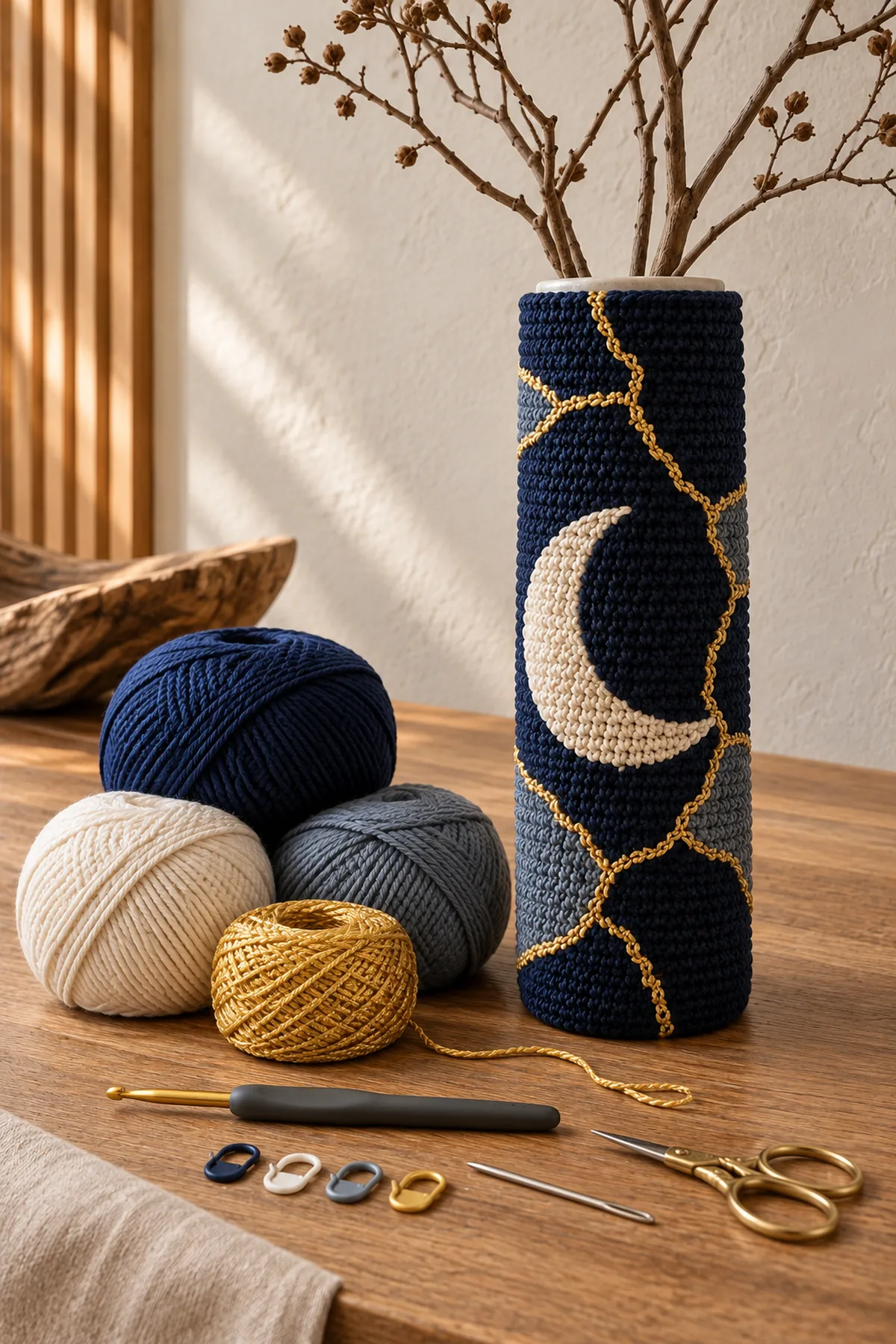
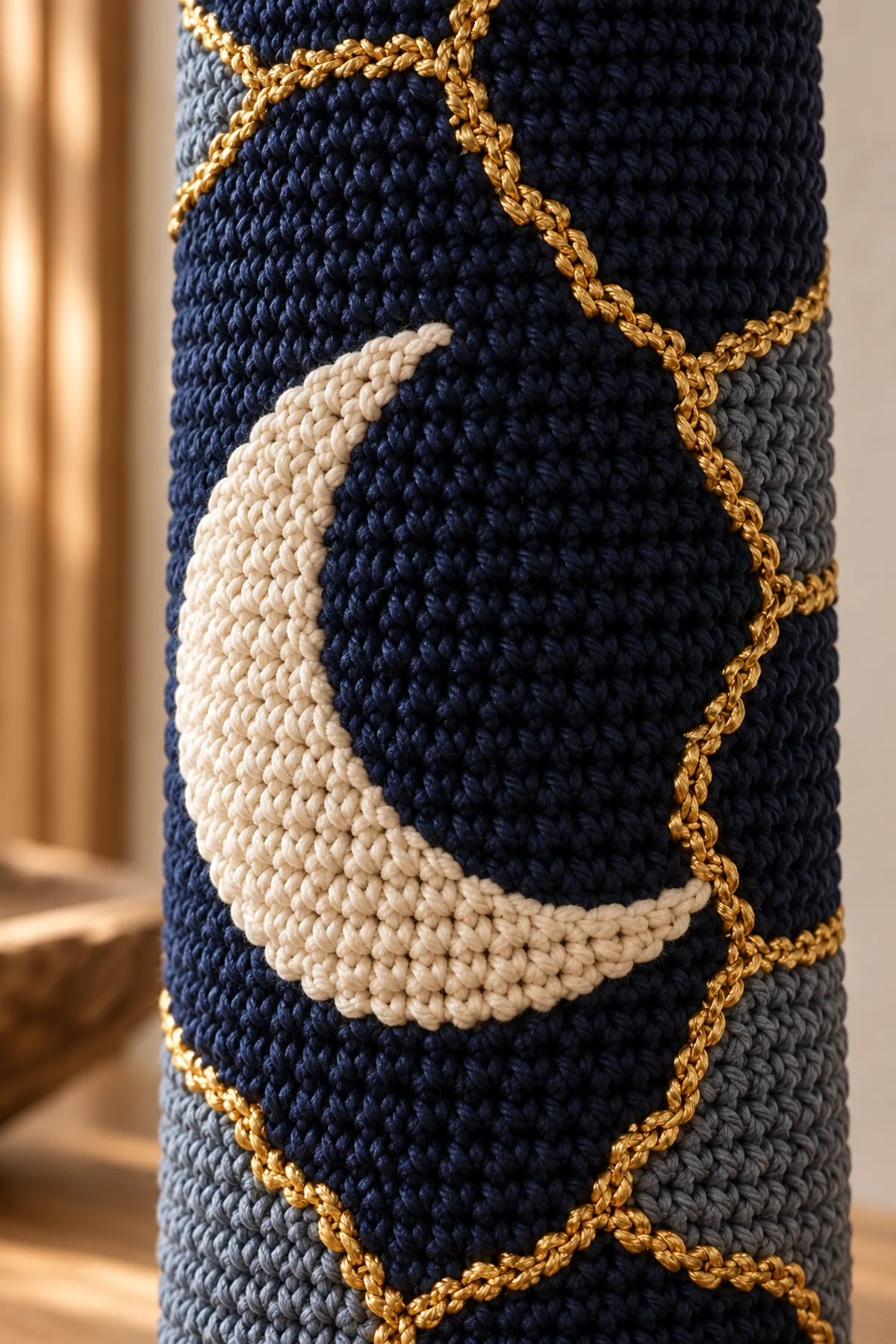
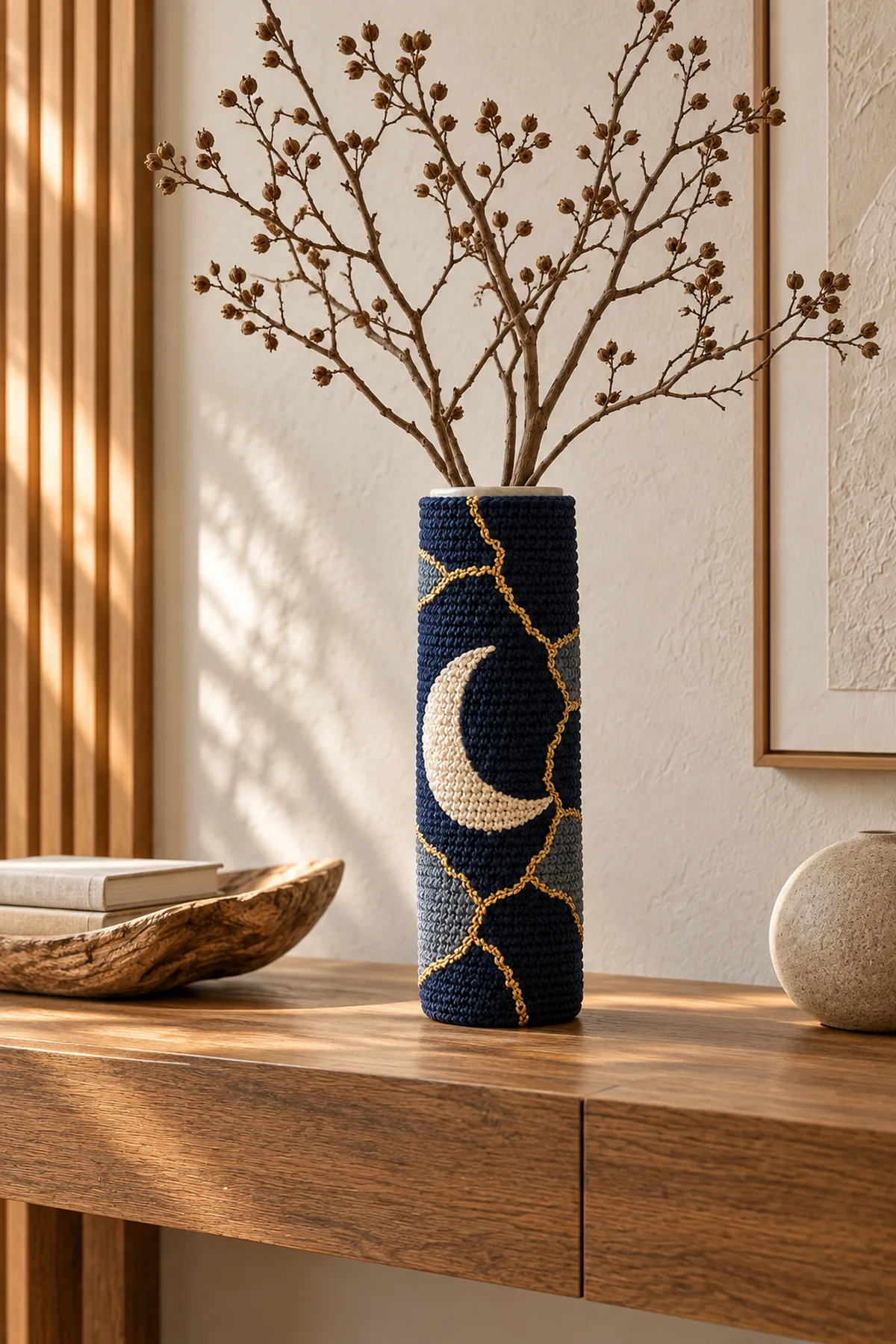
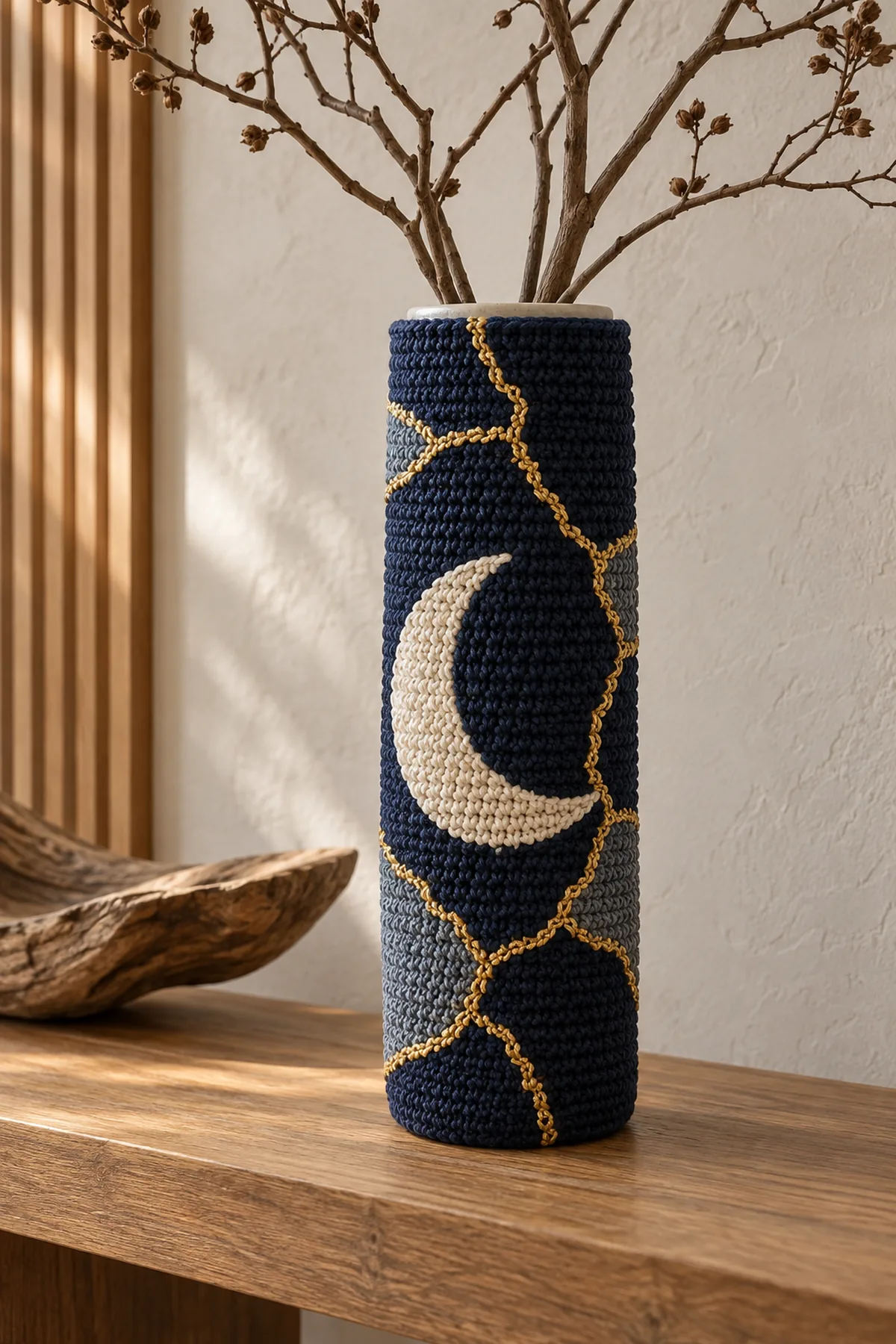
This crochet kintsugi moon vase sleeve is a midnight-indigo vase sleeve with an ivory crescent moon, asymmetrical ceramic-inspired color blocks, and branching metallic-gold surface lines that evoke repaired kintsugi seams. The construction is designed specifically for the named project rather than adapted from a generic template.
A fitted tapestry-crochet rectangle wraps the vase. Short rows round the ivory crescent, slate fragments interrupt the indigo field, gold surface branches cross the color boundaries, and an invisible back seam plus narrow base drawcord secure the sleeve.
Why You’ll Love This Project
The tapestry crochet, surface slip stitch, curved short rows, invisible seam create a distinct vase sleeve with clear checkpoints, practical structure, and strong handmade texture.
Materials
- Approximately 260 yards midnight-indigo DK cotton yarn
- Approximately 90 yards ivory DK cotton yarn
- Approximately 45 yards muted-slate DK cotton yarn
- Approximately 35 yards metallic-gold crochet thread held with gold DK yarn
- One cylindrical vase approximately 10 inches tall
- Ten locking stitch markers
- 3.75 mm crochet hook
- Yarn needle
- Scissors
- Tape measure
- Blocking mats and rustproof pins
Gauge, Measurements, and Planning
Make a generous swatch in the main stitch. The target gauge is 19 single crochet stitches and 20 rows = 4 inches; change hook size if needed before beginning the full runner.
Make and wash a gauge swatch before beginning. Measure only after the swatch is completely dry. If the stitch width differs, change hook size rather than pulling the working yarn tighter. Keep a written count at the end of every section so the finished edges remain balanced and the assembly points line up.
Abbreviations and Special Stitches
- ch: chain
- dc: double crochet
- hdc: half double crochet
- sc: single crochet
- sl st: slip stitch
- st(s): stitch(es)
- BLO: back loop only
- yo: yarn over
Special stitch guidance: Kintsugi line: work relaxed surface slip stitches along the marked branch path. Curved moon short row: turn before the row end and resolve the wrap on the following pass. Invisible seam: mattress stitch through matching edge bars.
Before You Begin
- Maintain the stated 67-stitch construction count at every checkpoint.
- Beginning chains count only where explicitly stated.
- Block components before final assembly or border work.
- Use US crochet terminology throughout.
Instructions
Crochet the Indigo Ground
Count carefully and compare the work with the finished measurements.
- Foundation Row: Ch 68. Sc in the second chain from the hook and across. Turn. (67 sts)
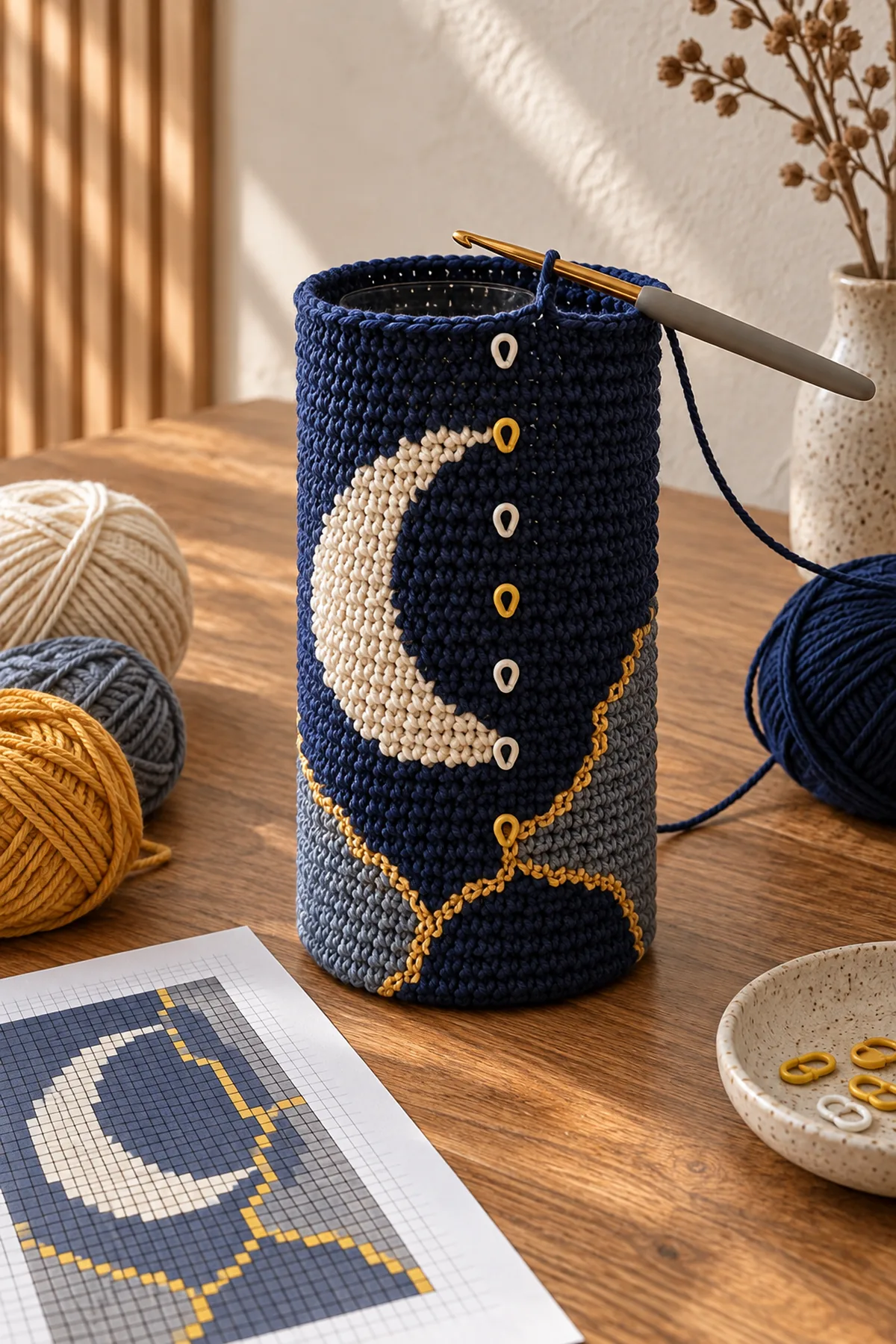
- Rows 2–12: Work even in midnight indigo while marking the moon and fragment chart columns.
- Check the strip around the vase without stretching.
Shape the Crescent Moon
Count carefully and compare the work with the finished measurements.
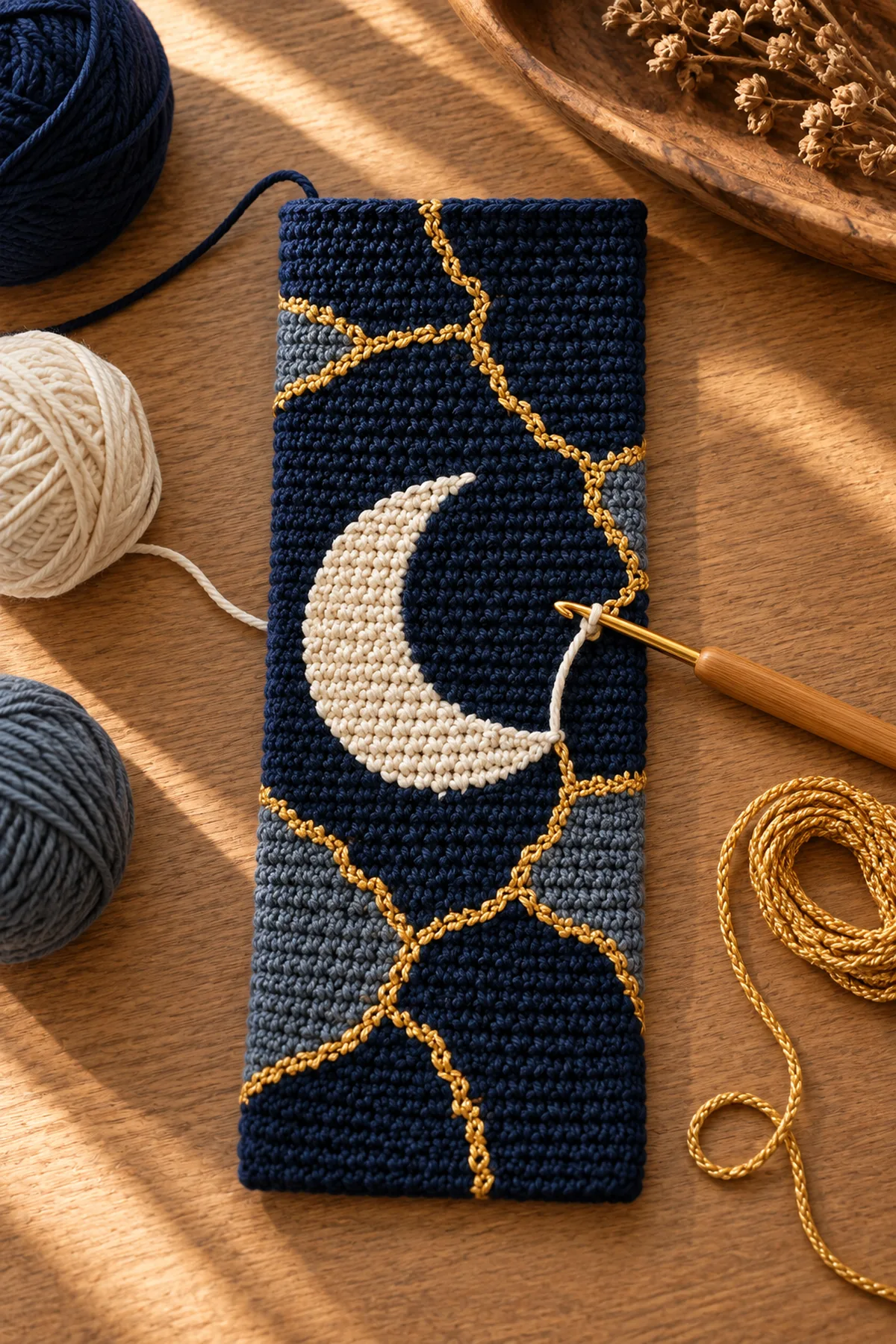
- Rows 13–34: Introduce ivory by tapestry crochet and use paired short rows to curve both crescent tips.
- Add three muted-slate fragments at staggered heights.
- Maintain 67 stitches after every full-width row.
Embroider the Golden Seams
Count carefully and compare the work with the finished measurements.
- Rows 35–50: Complete the indigo ground and fasten off.
- Surface-slip-stitch branching gold lines through and between the slate fragments.
- Keep each line relaxed so the sleeve remains flexible.
Seam and Fit the Sleeve
Count carefully and compare the work with the finished measurements.
- Block the rectangle to its stated measurements.
- Mattress-stitch the back edges and add a narrow eyelet round at the base.
- Thread a small indigo drawcord, fit the sleeve over the vase, and tighten underneath.
Assembly and Shaping
Follow the project-specific assembly sequence for kintsugi inspired moon vase sleeve. Pin or mark every component before joining and keep the finished layout balanced.
Lay every component on a flat surface before joining. Match the marked centers first, then divide each remaining edge into equal sections. Work through both layers with consistent tension and pause after each section to check that the fabric lies flat. This measured approach prevents twisting and keeps decorative details facing the intended direction.
Finishing
- Weave every tail through matching stitches and reverse direction once.
- Inspect all joins, motif anchors, and border corners.
- Block to 10 inches tall by 14 inches around, sized for a cylindrical vase.
- Allow the runner to dry completely before styling.
For a polished result, weave each tail through several same-color stitches, reverse direction once, and trim only after the fabric has been gently stretched. Block to the listed dimensions without flattening textured stitches. Inspect joins, borders, straps, and decorative pieces before the project is used or gifted.
Helpful Tips
- Use locking markers at every construction checkpoint.
- Record row and motif counts as you work.
- Keep joins and color changes relaxed enough to lie flat.
- Photograph the complete layout before final assembly.
Good lighting and a contrasting stitch marker make counting much easier. If a section looks uneven, compare the current count with the previous checkpoint before continuing. Fixing one missed stitch early is faster than compensating later, and it preserves the measurements used by the assembly instructions.
Frequently Asked Questions
Is this real kintsugi?
No. It is an original textile design inspired by the visual rhythm of repaired ceramic seams.
Can I fit a tapered vase?
Yes. Decrease one stitch at each edge on selected lower rows.
Can I omit metallic yarn?
Use mustard or warm ochre cotton for easier stitching and washing.
Conclusion
The finished crochet kintsugi moon vase sleeve showcases tapestry crochet, surface slip stitch, curved short rows, invisible seam in a construction that matches the project from foundation through finishing.
Printable Crochet Pattern Card
Project: Crochet Kintsugi Moon Vase Sleeve
Skill level: Intermediate Hook: 3.75 mm Yarn: DK
Finished size: Approximately 10 inches tall by 14 inches around, sized for a cylindrical vase
Card Materials
- Approximately 260 yards midnight-indigo DK cotton yarn
- Approximately 90 yards ivory DK cotton yarn
- Approximately 45 yards muted-slate DK cotton yarn
- Approximately 35 yards metallic-gold crochet thread held with gold DK yarn
- One cylindrical vase approximately 10 inches tall
- Ten locking stitch markers
- 3.75 mm crochet hook
- Yarn needle
- Scissors
- Tape measure
- Blocking mats and rustproof pins
Card Instructions
- Crochet the Indigo Ground: Foundation Row: Ch 68. Sc in the second chain from the hook and across. Turn. (67 sts) Rows 2–12: Work even in midnight indigo while marking the moon and fragment chart columns. Check the strip around the vase without stretching.
- Shape the Crescent Moon: Rows 13–34: Introduce ivory by tapestry crochet and use paired short rows to curve both crescent tips. Add three muted-slate fragments at staggered heights. Maintain 67 stitches after every full-width row.
- Embroider the Golden Seams: Rows 35–50: Complete the indigo ground and fasten off. Surface-slip-stitch branching gold lines through and between the slate fragments. Keep each line relaxed so the sleeve remains flexible.
- Seam and Fit the Sleeve: Block the rectangle to its stated measurements. Mattress-stitch the back edges and add a narrow eyelet round at the base. Thread a small indigo drawcord, fit the sleeve over the vase, and tighten underneath.
Finish: Check every count, weave in all ends, block to measurement, and inspect each join.